.png)

The Catalyst: When the Bomb Drops
- Ali Cross

- Apr 16
- 7 min read
Many writers confuse the Catalyst (or Flash Point) with a choice or a decision—but the Flash Point isn't about the Hero doing something; it’s about something happening to them. It’s the airplane flying into their workspace. It’s the bomb landing in their living room.
The scene was an early Monday morning in September, 25 years ago. David was upstairs getting dressed for work, while I was downstairs in the kitchen, feeding our one-year-old twins in their highchairs. Rolie-Polie-Olie was on TV. The babies were laughing at my antics as I danced around, entertaining them. There wore cheerios, bananas and milk on their grabby hands, chins and bare chests.
My phone rang.
I always answer the phone when my sister calls because…well, there are just some people you never refuse a call from, ya know? Heather is one of those people.
“Hey, Heath!” I said when I answered. “What’s up?”
Heather’s voice was controlled. Very even. Very not-Heather. “Ali. Where is David?”
“Um. He’s upstairs? Getting ready for work?” I had no idea why she’d be asking about him that way. She lives 5,000 miles and three time zones away from us, so ‘where is David’ seemed like a weird thing for her to ask.
“He didn’t go to New York? I thought he had a business trip.” Her tone was clipped, rising into an emotion I couldn’t name but that made my skin buzz.
“Oh,” I said. “His boss canceled it, like last night. Said they’re gonna go on Wednesday or something.”
She spoke over me. “Do you have the TV on?”
“I mean, we’re watching Rolie-Polie-”
She interrupted me again: “Put on the news.”
I did as she asked. And that’s when I saw it. Probably the same time most of you watched it, too.
What happened on September 11th, 2001, changed our lives. Many Americans chose to enlist following that day. For most of us, nothing tangible changed (except for additional restrictions at the airport), but a lot changed inside us.
So much so that I bet most of you can remember where you were when you learned about the terrorist attack. Or the first time you learned about it at school, if you were too young to remember it live. It made an indelible impression on our hearts and minds and changed how we think and feel.
That moment—not the terrorists’ preparation, or the things we did when we watched it all unfold on TV. Not when you cried watching it. Or called your Mom. Or hugged your babies. Just THAT moment when you watched the plane fly straight into one of the buildings—that was a FLASH POINT in your life.
It’s the “Point of No Return” where a truth is revealed that can never be un-seen.
FLASH POINTS IN THE STORYTELLER'S WAY
For the Hero: It’s an emotional break point. Even if they try to play it cool or pretend they can go back to “normal,” the bridge behind them is already on fire.
For the Plot: This is the kick-off. No more setup, no more stalling. The forward momentum has started, and there’s no rewind button.
For the Foe: This is where the opposition gains relevance. Even if they aren’t on screen yet, the world is shifting in their favor.
In life, these moments feel like chaos. We want to scramble for the pieces and glue them back together. But as a writer, you know better. You know that without the Flash Point, your Hero stays stuck on the couch forever.
The “bomb” is the reason your Hero takes action.
→ TRY THIS: A WRITING EXERCISE ←
The “Un-Seeable” Truth
Write a 200-word scene where an external event occurs that changes the Hero’s reality instantly.
✖️ Don’t let them make a plan.
✖️ Don’t let them choose a side.
☑️ Do focus entirely on the moment of impact.
What is the one piece of information or the one event that makes it impossible for them to ever go back to the first page of the book?
Excellent Uses of the Catalyst / Flash Point
In The Storyteller’s Way (an expanded beat sheet built upon Save the Cat), what most frameworks call the Catalyst/Inciting Incident lines up with Beat 4: “FLASH POINT—the moment the hero can’t un-know or can’t undo, and the plot gains irreversible forward momentum. A template you can use when crafting your own powerful Flash Point is
Disruption → Cost → Direction.
Below are recent (2006–present), high-clarity Flash Point / Catalyst scenes that demonstrate that Disruption → Cost → Direction. I used Amazon's bestseller list to choose the top 5 commercial genres (Romance, Fantasy, Thriller/Mystery, Science Fiction, Historical Fiction).
If you use a different “top 5,” tell me yours and I'll add it to the list! 🔥
ROMANCE

Red, White & Royal Blue (2019, Casey McQuiston)
Catalyst scene: A public PR disaster forces the First Son and a British prince into a staged “friendship.”
Why it’s great: It creates an external constraint (public scrutiny) that instantly generates sustained proximity + pressure, while also setting up the emotional cost: pride, vulnerability, and the threat of being seen.
Catalyst formula (you can use in your own work): Disruption → Cost → Direction
Status quo: Two high-profile heirs can avoid each other and keep their images curated. Disruption: A public PR fiasco forces a staged friendship
→ Cost: Constant scrutiny and ego bruising
→ Direction: proximity with stakes they can’t opt out of.

Beach Read (2020, Emily Henry)
Catalyst scene: Two authors with opposing styles make a competitive summer “swap genres / prove it” pact.
Why it’s great: The plot engine is born from a choice that’s fun on the surface but costly underneath—because it forces both characters to confront what they’re avoiding (grief, cynicism, fear of sincerity).
Catalyst formula:
Status quo: Two writers cope with life by sticking to their own beliefs about love/hope (and avoiding what hurts).
Disruption: They agree to a genre-swap challenge
→ Cost: having to write (and live) what they secretly doubt
→ Direction: intentional collisions + forced honesty.
FANTASY

The Fifth Season (2015, N.K. Jemisin)
Catalyst scene: A shattering personal loss collides with a world-scale catastrophe, yanking the protagonist out of “life as-is.”
Why it’s great: It’s a true “can’t go back” moment on two levels (intimate + apocalyptic), and it locks in stakes that are emotional first, epic second—exactly what makes fantasy catalysts stick.
Catalyst formula:
Status quo: Survival inside a harsh but known system—endure, don’t hope.
Disruption: Personal devastation hits alongside a world catastrophe
→ Cost: the destruction of all that's “normal”
→ Direction: movement with a purpose (grief turned into quest).

A Court of Thorns and Roses (2015, Sarah J. Maas)
Catalyst scene: The heroine’s survival-driven act triggers a supernatural consequence that removes her from her known world.
Why it’s great: The catalyst is action-based (not just news arriving), and the cost is immediate: safety, certainty, and the illusion that she can stay in control.
Catalyst formula:
Status quo: A controlled life defined by scarcity and responsibility.
Disruption: A survival choice triggers supernatural consequences
→ Cost: losing safety & agency
→ Direction: crossing into an unknown world under new rules.
THRILLER / MYSTERY

Gone Girl (2012, Gillian Flynn)
Catalyst scene: A wife disappears, and the husband is thrust into an investigation + media storm.
Why it’s great: It detonates the story’s central question instantly (“What happened, and who is lying?”) and forces the protagonist into a public pressure-cooker where every move carries consequence.
Catalyst formula:
Status quo: A strained marriage can remain private, managed, and ambiguous.
Disruption: The wife vanishes
→ Cost: instant suspicion + public exposure
→ Direction: an investigation where every detail becomes a weapon.

The Silent Patient (2019, Alex Michaelides)
Catalyst scene: A shocking act of violence followed by total silence becomes the case that obsesses the narrator.
Why it’s great: The catalyst doesn’t just “start the plot”—it hooks a character wound (obsession/need-to-know) to the external problem, so the forward motion is emotional compulsion, not convenience.
Catalyst formula:
Status quo: A talented woman’s life appears stable from the outside; a therapist’s life feels incomplete without a “case” that matters.
Disruption: A violent act followed by silence creates an irresistible mystery
→ Cost: obsession and ethical risk
→ Direction: pursuit of truth at personal expense.
SCIENCE FICTION

The Martian (2011, Andy Weir)
Catalyst scene: A mission disaster leaves the protagonist stranded and presumed dead.
Why it’s great: It’s clean, irreversible, and instantly defines: goal (survive), stakes (certain death), ticking clock (resources). A masterclass in a problem that demands motion.
Catalyst formula:
Status quo: A planned mission with structure, support, and a return ticket.
Disruption: Disaster leaves him stranded
→ Cost: isolation and near-certain death
→ Direction: solve-or-die problem-solving with a ticking resource clock.
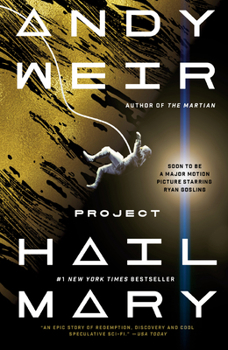
Project Hail Mary (2021, Andy Weir)
Catalyst scene: The protagonist wakes alone with amnesia and realizes he’s on an urgent, world-saving mission.
Why it’s great: The catalyst is disorientation + obligation at once—identity stakes (who am I?) fused to global stakes (why must I act?), creating momentum that doesn’t rely on slow setup.
Catalyst formula:
Status quo: (Missing—because the catalyst is waking into crisis.)
Disruption: He wakes alone with amnesia and a mission
→ Cost: the cost is identity stability and any easy refusal
→ Direction: reconstruct the past to act in the present—fast.
HISTORICAL FICTION

The Nightingale (2015, Kristin Hannah)
Catalyst scene: Wartime occupation upends daily life and forces immediate, dangerous choices about compliance vs resistance.
Why it’s great: It’s a Flash Point that feels historically inevitable yet personally specific—because it forces the characters’ values into action before they feel ready.
Catalyst formula:
Status quo: Ordinary life persists under assumptions of safety, home, and predictable roles.
Disruption: Occupation upends the rules
→ Cost: freedom (and moral comfort)
→ Direction: choose: comply, resist, or be crushed.

Pachinko (2017, Min Jin Lee)
Catalyst scene: A life-altering romantic/sexual choice triggers lasting social and family consequences.
Why it’s great: It’s a quieter catalyst than an explosion—but still irreversible. The emotional cost is baked in (shame, survival, longing), which is why the story can sustain a multi-decade saga.
Catalyst formula:
Status quo: A young woman’s future seems narrow but understandable inside community expectations.
Disruption: A relationship/choice changes her social reality
the cost is , and the direction becomes a
→ Cost: reputation and security
→ Direction: new life path shaped by survival and consequence.
David’s flight plan for that Monday morning—had his boss not called it off—would have put him on the same path as one of the fated planes, but a few hours later. He and his boss never did make it out to New York.
If something has recently blown up in your world, take a breath. You aren’t failing; you’ve just reached the part of the story where things get interesting. 💛


Comments